

You’re tired, unmotivated, irritated at almost everything, and dreading doing it all again tomorrow. At the same time, you feel ashamed because these experiences feel so foreign to your otherwise high-achieving, “do it all” identity. These are some of the most common symptoms of burnout, especially in high-stress work environments where prolonged stress becomes normalized.
Burnout rarely happens because someone is lazy, unmotivated, or “doing too much.” In many high-achieving individuals, burnout develops when the body and brain spend too long in “go, go, go” without enough true recovery to balance it.
Entrepreneurs, executives, athletes, and driven professionals are often praised for pushing through stress, staying productive, and performing at a high level under pressure. Over time, though, elevated stress levels and poor work-life balance can take a serious toll on both mental health and physical health, increasing the risk of burnout and emotional exhaustion. The constant activation of the sympathetic nervous system can begin to negatively affect energy, recovery, resilience, sleep, and performance.
This article explores burnout through the lens of recovery psychophysiology, why high performers are especially vulnerable to it, and what it truly takes to rebuild a resilient nervous system capable of supporting long-term performance.
.jpg)
High-achieving individuals often unintentionally ignore stress because discipline, drive, and productivity reinforce the habit of pushing through fatigue. Over time, productivity can quietly become tied to identity, making rest feel undeserved or a waste of time. Certain personality traits, especially perfectionism and high self-expectations, can increase vulnerability to job burnout and chronic stress.
Constant pressure, long hours, and mental overload eventually start to feel normal, especially in environments where high performance is rewarded and slowing down feels like falling behind. In many cases, people experience burnout gradually while continuing to care for loved ones, family members, teams, or patients without recognizing how depleted they have become.
Many entrepreneurs, executives, athletes, and your typical “overachievers” genuinely thrive on handling a plate overflowing with hard tasks while juggling tight schedules. However, when self-care and recovery consistently take a back seat to achievement, the nervous system can become dysregulated, remaining in a prolonged state of activation without enough opportunity to fully recover and return to a sense of safety.
The goal is not to lose the drive that makes high performers successful, but to create enough recovery, awareness, and balance to sustain that performance over the long term without risking physical and psychological breakdown.
For many individuals, burnout does not initially feel like “too much stress.” Instead, it often unfolds gradually, leaving you feeling like you’re slowly losing yourself. You may still be getting things done, showing up for work, training hard, and caring for others while quietly noticing that your patience is shorter, your sleep feels less restorative, your mind never fully settles, and small tasks start to feel heavier. The body and mind can adapt remarkably well to stress through a physiological process known as stress adaptation.
The World Health Organization classifies burnout as an occupational phenomenon linked to chronic workplace stress that has not been successfully managed. Burnout is not a sign that you cannot handle it all. More often, it reflects a nervous system that has gone too long without enough recovery, rest, and time away from constant striving.
A phone battery can only stay in “low power mode” for so long before it eventually shuts down and needs to recharge. Burnout recovery often requires more than rest alone because the root causes of burnout usually involve chronic stress exposure, lack of control, poor boundaries, and insufficient recovery habits. Recharging is not a passive act, and individuals often make the mistake of thinking one vacation will fix it all.
Most people assume burnout will disappear after a vacation, long weekend, or a few days off. Yet many return still dealing with mental and physical exhaustion, muscle tension, disrupted sleep, and elevated stress levels. When the underlying patterns driving chronic stress remain unchanged (nonstop pressure, lack of boundaries, or poor recovery habits), the cycle of burnout continues. Without stress management strategies and consistent recovery practices, burnout symptoms often return quickly in daily life.
Rest and time off matter, but breaking this cycle of complete depletion requires addressing what keeps the nervous system stuck in overdrive in the first place, helping the body and brain feel safe enough to restore energy, regulate stress, and return to a more sustainable rhythm.
%20(1).jpg)
We often define resilience as the ability to “keep going no matter what,” closely tying it to toughness and the capacity to tolerate increasingly high levels of stress without breaking. In some cases, this is true, and it can be helpful in adapting to change or persisting through difficult times when necessary. However, when resilience becomes constant self-sacrifice or endless “pushing through” without enough recovery, it can quietly teach the nervous system to ignore exhaustion and normalize chronic stress instead of healing from it. True resilience is not about ignoring stressors or endlessly pushing through exhaustion; it is about creating sustainable coping strategies that protect long-term wellness.
Resilience means allowing yourself grace and time to shift between arousal and relaxation, without getting stuck in survival mode for too long. A resilient nervous system is flexible, adaptable, and capable of returning to equilibrium. Relaxation is not as easy as it sounds. Building true resilience comes from consistent recovery habits and intentional resets, not from pushing ourselves to the limit. Restful sleep, physical activity, setting boundaries, breathwork, social support, and recovery practices may seem small, but they can help restore nervous system flexibility and improve the body’s capacity to handle stress instead of becoming overloaded by it.
.avif)
Guided light, sound, and touch that balance your nervous system through slow, rhythmic breathing. Feel restored calm in just 3 minutes a day.
Preorder yours →%20(1).jpg)
“Overachieving” is often viewed through the lens of discipline, motivation, and work ethic. Yet beneath those behaviors lies a nervous system constantly responding to pressure, reward, comparison, and demands. Understanding the neuroscience behind achievement can help explain why many driven individuals accomplish so much yet become more vulnerable to chronic stress, burnout, and difficulty slowing down.
Dopamine is often referred to as the brain’s “reward chemical.” However, neuroscience research finds it is more strongly tied to motivation, anticipation, and the pursuit of something meaningful, rather than to the reward itself.1,2 This is one reason high-achieving individuals can become deeply engrossed in striving for productivity and performance. Each accomplishment reinforces neural pathways associated with achievement, teaching the brain to continue seeking success and productivity. In modern work environments and high-pressure cultures, social media, productivity culture, and external validation can further reinforce this cycle of constant striving.
Ambition and striving toward meaningful goals can be healthy and deeply fulfilling. However, when taken too far, the nervous system may begin associating constant productivity with self-worth, emotional regulation, or even safety. Slowing down starts to feel uncomfortable and shameful, despite the body clearly craving rest.
Adrenaline is a hormone released by the adrenal glands in response to elevated stress. It increases energy, alertness, heart rate, and focus, ultimately preparing you for action. When we encounter constant stressors, whether tight deadlines, high competition, or demanding expectations, repeated sympathetic arousal begins to feel normal, or almost necessary, to function.
Many high-performing individuals begin associating adrenaline-fueled states with better performance, accomplishment, job satisfaction, and even identity. Over time, this can habituate the nervous system to high-arousal states, a phenomenon researchers describe as “stress dependency.”3 Healthcare workers, caregivers, executives, and other high-performing professionals are particularly vulnerable to prolonged stress exposure and burnout.
While adrenaline is advantageous for performance enhancement, sustaining this state or relying on the “rush” can impair recovery, emotional regulation, sleep, and immune function over time.4
The human body is designed to handle stress in cycles, moving between periods of high arousal and periods of recovery. Yet, when stress becomes chronic and recovery becomes insufficient, the nervous system can lose its ability to fully restore balance. It can feel like being hit by constant waves without ever getting a moment to breathe, recover, or move forward. Over time, this persistent strain can begin to alter stress physiology, recovery capacity, and autonomic nervous system function in ways that affect our physical and mental health.
Chronic stress demands constant adjustments by the nervous, endocrine, cardiovascular, and immune systems to maintain stability, a process known as allostasis. While these adjustments are necessary and protective, prolonged arousal from stress without adequate recovery can lead to “allostatic overload,” or the cumulative wear and tear that chronic stress places on the body.5
A systematic review by Guidi et al. in 2021 found that elevated allostatic load was associated with dysregulation of the autonomic nervous system and poorer long-term health outcomes. Chronic activation of stress-response systems has also been associated with increased risk factors for cardiovascular disease, immune dysfunction, and heart disease over time.
From this perspective, burnout is more than emotional or physical exhaustion; it is a true physiologic cost of sustained adaptations.
Heart rate variability (HRV) refers to the natural variation in time between heartbeats and is considered a marker of autonomic nervous system function. When analyzing HRV trends, the goal is to understand what is optimal for the individual, rather than focusing strictly on “high” versus “low” values.6 That said, in otherwise healthy individuals, scientific literature generally finds higher HRV to be associated with greater parasympathetic activity and a stronger ability to adapt to stress, while chronically suppressed HRV is often linked to prolonged sympathetic activation, physiologic stress, fatigue, and impaired recovery.7
A 2018 systematic review published in PLOS ONE on aspects of burnout found that high levels of job stress are associated with decreased heart rate variability.8 In high-performing individuals, the work-related stressors may keep the body in a chronic, overwhelmed state without the ability to recover, gradually suppressing HRV over time. From a physiologic perspective, suppressed HRV is not a definitive sign of “stress,” but rather can provide insight into a nervous system struggling to recover efficiently from cumulative allostatic load.
For many people experiencing burnout, rest alone does not automatically cure the issue, because forced relaxation can feel uncomfortable and, quite frankly, may worsen symptoms at first. This is because the nervous system may no longer recognize “slowing down” as a safe, baseline state when it is dependent on the adrenaline rush of productivity and success. Understanding how stress conditioning and baseline shifts in the nervous system develop can help explain why true recovery often requires more than simply taking time off.
Persistent sympathetic dominance refers to the shift in our nervous system towards a chronically stressed state, making it harder to relax, sleep deeply, recover, or feel at ease. This is not simply about “feeling stressed.” It reflects a deeper shift in autonomic regulation, where operating in survival mode gradually becomes the nervous system’s baseline over time. In individuals experiencing burnout, living in sympathetic dominance and chronic stress may contribute to feelings of fatigue, poor sleep, emotional exhaustion, irritability, and difficulty relaxing.9
Stress conditioning occurs when the nervous system becomes so accustomed to chronic stress and a high state of alert that feeling busy or constantly “on” starts to feel normal. Through neuroplasticity, the brain and nervous system adapt to repeated stressors, conditioning the brain and the body to see “stress” as something it “needs” to function.
A study published in 2015 in Neuroscience & Biobehavioral Reviews found that repeated exposure to chronic stress can reshape brain networks involved in stress regulation. The authors describe how the nervous system gradually adapts to repeated stressors through neuroplasticity, strengthening stress-response pathways over time. Again, this process helps explain stress conditioning and supports the idea that it changes both psychological and physiological functioning, as operating in chronic survival mode gradually shifts our baseline towards the sympathetic nervous system.
.jpg)
For anyone experiencing burnout, remember that it is not because you can’t “do it all.” It is a physiological recovery issue in which the nervous system gradually loses its ability to shift out of chronic stress and back into restoration. Symptoms of chronic sympathetic arousal, or burnout, include exhaustion, low motivation, increased irritability, and difficulty truly relaxing. Finding strategies that help retrain your capacity to recover, such as resonance frequency breathing, can help restore nervous system flexibility over time.
The Ohm Resonance Lamp combines resonance-frequency breathing with light, sound, and touch to help the body recover from stress, build real mind–body resilience, and help people feel more present, more balanced, and more in sync, from the inside out. What helps you feel most restored when you need to truly reset and recover?

Dr. Sarah Zimmer is a physical therapist, clinic founder, and healthcare writer specializing in chronic pain, nervous system health, and accessible wellness education.
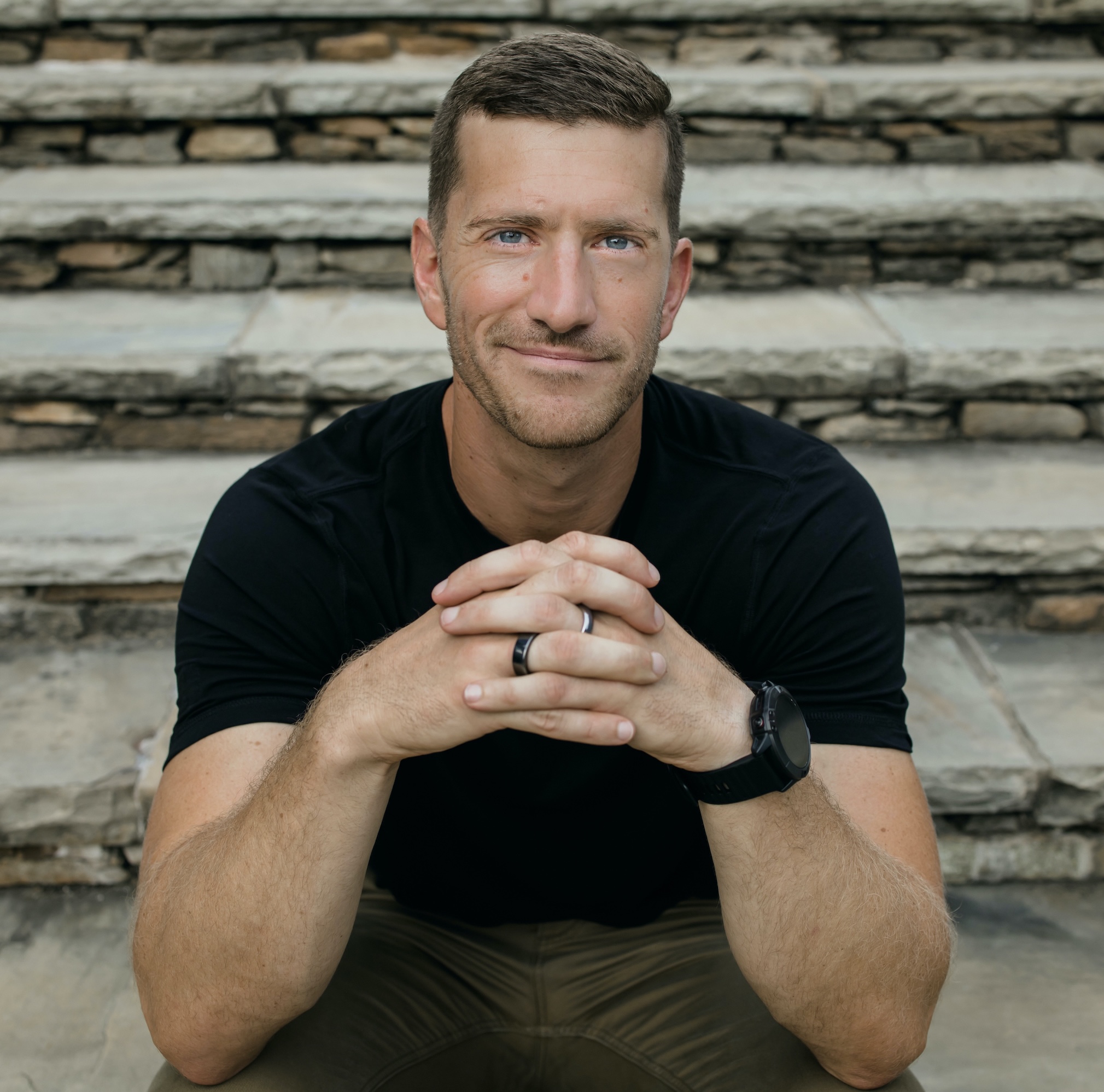
Dr. Wiles is a health and performance psychologist specializing in psychophysiology, regulation, and human performance. He serves as Chief Health & Performance Officer at Ohm.


.jpg)