
Key Takeaways:
Stress doesn’t always arrive all at once. It accumulates over small moments when your body doesn’t fully recover. You can’t always remove stress from your life, so advice often focuses on managing it. But what does that truly mean in practice?
Many people think stress management has to mean a long meditation session, a perfect wellness routine, or a complete lifestyle change. In reality, your nervous system responds to smaller signals. Sometimes, just a few minutes can help shift your body toward a sense of calm.
The 3-Minute Reset is a simple rhythm-based breathing practice designed to support nervous system recovery in just a few minutes.
Stress can build up throughout the day, like a bucket filling drip by drip until it overflows. Even low-level stressors accumulate if your body never gets a chance to recover.
It’s easy to become used to functioning in a mildly activated state for so long that it starts to feel normal. You may not even notice how activated your body feels until symptoms like exhaustion, irritability, or insomnia begin to appear.
But small resets can interrupt the pattern, triggering a physiological shift that tells your body it’s safe to slow the stress response and recover. The more often your body experiences regulation, the more familiar that state becomes.

The 3-Minute Reset involves three considerations that help shift the body out of stress mode and back towards balance:
Stress can change your breathing patterns before you are aware of it, causing your breaths to become shorter and faster. You may even unconsciously hold your breath when you’re overwhelmed.
Slowing the breath creates a signal the body can respond to. It’s not about forcing deep breaths. Instead, the goal is to allow the breath to become slower, steadier, and more rhythmic over time.
This type of slow, rhythmic breathing technique is called resonance breathing. When your breathing slows to about 4.5 to 6.5 breaths per minute, it begins to synchronize with your body's natural patterns. Your heart rate begins to slow, and the nervous system can begin to calm.
Longer exhales are associated with the parasympathetic nervous system, which is involved in rest and recovery. Even slightly extending the exhale can help influence heart rate and arousal.2
Try inhaling gently through the nose for about four seconds, then exhaling for six seconds. The goal is not perfection, but to find a breathing pace that feels steady and sustainable.
Your nervous system responds to patterns. Rhythmic breathing provides the nervous system with a more predictable pattern to respond to, which may help the body shift away from a state of high alert.
What Happens in Your Body During a Reset
When you experience stress, your sympathetic nervous system revs up and releases stress hormones like cortisol. You may notice increases in heart rate, muscle tension, and breathing rate. This response primes the body to respond quickly, as part of a normal protective mechanism during stressful situations.
But with chronic stress, the body spends more time in this stimulated state and less time recovering.
A reset signals that it’s safe to soften tension and slow down. As breathing slows and becomes more rhythmic, the heart rate often slows as well.4 Muscle tension softens when the body receives signals that it no longer needs to stay on high alert.
A short 3-minute reset can fit into everyday moments where you need a reset, such as:
.avif)
Guided light, sound, and touch that balance your nervous system through slow, rhythmic breathing. Feel restored calm in just 3 minutes a day.
Preorder yours →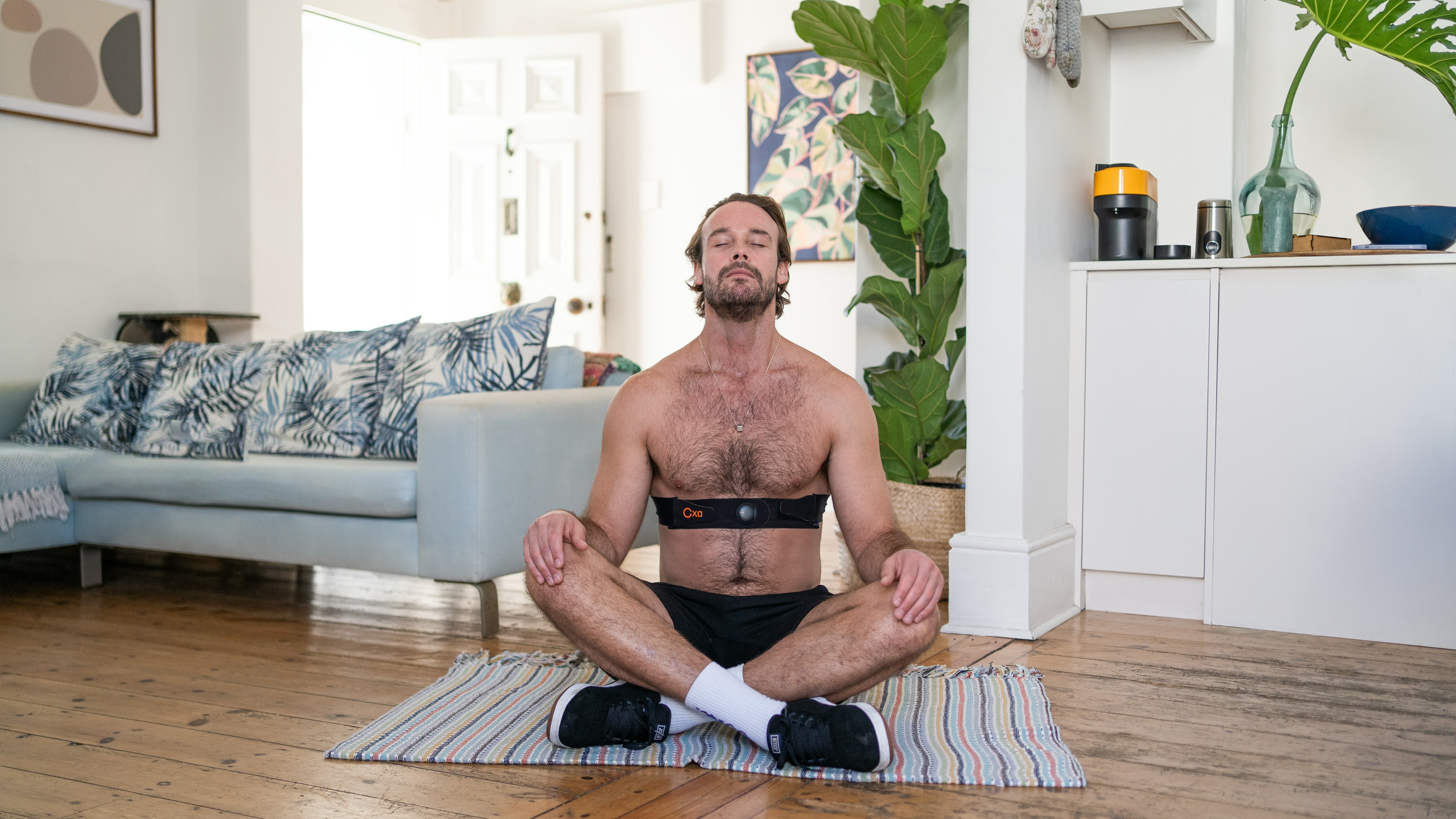
Rapid regulation techniques work with the body’s systems. The 3-Minute Reset helps shift the body away from a stress response and toward a more regulated state.
Breathing is one of the few body functions that operate both automatically and voluntarily. During stress, respiratory rate may increase as part of the protective stress response. But because you can also voluntarily control breathing, it offers a direct way to influence the nervous system.
Research suggests that consciously slowing and controlling your breathing can affect how the nervous system operates. For example, it may change measures such as heart rate variability (HRV) and help the body regulate blood pressure during stress recovery.
HRV is a measurement of the variation between heartbeats. It can help you better understand the nervous system's flexibility and ability to adapt to stress and recovery. Research suggests that slower breathing patterns, including resonance breathing, may help support parasympathetic activity and improve HRV patterns over time.7
The baroreflex is a physiological feedback system that involves sensors called baroreceptors. These sensors are located in the walls of blood vessels, where they detect changes in blood pressure and communicate this information to the brain. In response, the brain adjusts heart rate, vascular tone, and breathing patterns.
Research suggests that resonance breathing may help strengthen baroreflex sensitivity. Slow breathing supports communication between the heart, blood vessels, and brain, so the nervous system can respond more efficiently to stress and recovery signals.
Resonance breathing works because breathing directly influences systems involved in nervous system regulation.
Healthy nervous systems can shift into a state of stress when needed and return to recovery afterward. There’s no “perfect” HRV value as it’s completely individual to your body, but you can follow and learn from your personal trends.
Slow, rhythmic breathing has consistently been shown to increase HRV in many individuals, reflecting greater flexibility and a more adaptable stress response.3
Importantly, HRV is not about “optimizing” the body into perfection. It’s a reflection of adaptability. A healthy nervous system can respond to stress or return to a state of recovery as needed.
The autonomic nervous system has two primary branches that work together to help the body respond appropriately:
The nervous system is designed to activate when needed, so occasional stress itself is not the problem. Problems tend to arise when the body has trouble shifting out of stress mode.
Slow breathing practices may support parasympathetic nervous system activity via vagus nerve pathways. The vagus nerve is a two-way connection between the brain and internal organs like the heart, lungs, and digestive system. It also helps regulate the parasympathetic nervous system.6
Additional research suggests that slow breathing, particularly longer exhales, may influence parts of the brain involved in emotion and stress perception.
Respiratory sinus arrhythmia (RSA) is a natural pattern in which heart rate increases slightly during inhalation and decreases during exhalation. This variation indicates that communication between your heart, lungs, and nervous system is functioning well and supports flexibility in response to stress.
As breathing slows, the timing between inhalation, exhalation, heart rate, and blood pressure becomes more synchronized. Research suggests this synchronization may strengthen communication while supporting recovery-related vagal activity.7
By stimulating baroreceptors, resonance breathing appears to enhance respiratory sinus arrhythmia and engage the vagus nerve, both of which are involved in slowing the stress response and supporting recovery.
The 3-minute protocol uses breath timing and rhythm to help support regulation through the nervous system’s existing feedback pathways.
Many resonance breathing protocols use a pace of approximately 4.5 to 6 breaths per minute. This slower breathing cadence appears to correspond with the body’s natural cardiovascular rhythms. Research suggests this resonance range may maximize heart rate variability, baroreflex sensitivity, and respiratory sinus arrhythmia.
The exact pace matters less than consistency and comfort. Forced breathing can sometimes create more tension rather than less. It should feel steady and easy to follow.
Vagal tone refers to how effectively the vagus nerve is doing its job to regulate the activity of the parasympathetic nervous system.
Your breath plays a direct role in this process. During exhalation, vagal activity naturally increases, helping slow the heart rate and promote a state of rest and recovery.11 Meanwhile, baroreceptors monitor pressure changes to help maintain a stable heart rate and blood pressure.
The nervous system is constantly scanning for cues of safety or threat. Consistent practice of slow breathing patterns can act as a signal of safety that your body recognizes. The physical feeling of resonance breathing may be easier for the body to respond to than exercises that start with thoughts or directions from the brain.
In other words, what you physically experience in your body may influence your nervous system more deeply than simply telling yourself to calm down.
Evidence suggests that even short periods of slow breathing and nervous system regulation practices can meaningfully influence stress physiology and how you feel throughout the day.11
Research on slow-breathing interventions suggests that slow-paced breathing may help support stress regulation and psychological well-being across a variety of populations, including those experiencing work-related stress.
One of the benefits of these interventions is that they can fit into daily life, making them feel more approachable.
Controlled breathing practices can also be used as part of athletic recovery routines, particularly during periods of intense physical or mental stress.
Research suggests slow breathing may help influence recovery markers, autonomic balance, and cardiovascular regulation after exercise.
Importantly, these breathing practices aren't meant to override stress (physical activity is itself a productive stressor), but improve the body's efficiency in transitioning between activation and recovery.
Studies have found that slow-paced breathing can increase parasympathetic nervous system activity and improve stress recovery. Even short breathing exercises may help you feel more grounded and less likely to experience emotional reactivity when you feel overwhelmed.
While breathing practices are not a replacement for mental health care when needed, evidence suggests they may help improve awareness of physiological state and have a calming effect.
Sometimes you don’t need a complete lifestyle overhaul to reduce stress. The body may simply need a signal that it’s safe to breathe and recover.
The Ohm Resonance Lamp helps take the guesswork out of nervous system regulation. By using real-time biofeedback from your own physiology, it identifies and guides you toward your unique resonance frequency, helping you breathe more efficiently, improve HRV, and support long-term nervous system resilience.
Unlike generic breathing apps, the Ohm Resonance Lamp adapts to your body in real time, creating a personalized experience that makes regulation more effective and easier to sustain.
Ghasemi, F., Beversdorf, D. Q., & Herman, K. C. (2024). Stress and stress responses: A narrative literature review from physiological mechanisms to intervention approaches. Journal of Pacific Rim Psychology, 18, 18344909241289222. https://doi.org/10.1177/18344909241289222
Russo MA, Santarelli DM, O’Rourke D. The physiological effects of slow breathing in the healthy human. Breathe. 2017;13(4):298-309. doi:10.1183/20734735.009817
Chaitanya, S., Datta, A., Bhandari, B., & Sharma, V. K. (2022). Effect of resonance breathing on heart rate variability and cognitive functions in young adults: A randomised controlled study. Cureus. https://doi.org/10.7759/cureus.22187
Luo, Q., Li, X., Zhao, J., Jiang, Q., & Wei, D. (2025). The effect of slow breathing in regulating anxiety. Scientific Reports, 15(1), 8417. https://doi.org/10.1038/s41598-025-92017-5
Russell, G., & Lightman, S. (2019). The human stress response. Nature Reviews Endocrinology, 15(9), 525–534. https://doi.org/10.1038/s41574-019-0228-0
Laborde S, Allen MS, Borges U, et al. Effects of voluntary slow breathing on heart rate and heart rate variability: A systematic review and a meta-analysis. Neuroscience & Biobehavioral Reviews. 2022;138:104711. doi:10.1016/j.neubiorev.2022.104711
Zaccaro A, Piarulli A, Laurino M, et al. How breath-control can change your life: a systematic review on psycho-physiological correlates of slow breathing. Front Hum Neurosci. 2018;12:353. doi:10.3389/fnhum.2018.00353
Norcliffe-Kaufmann L. Stress and the baroreflex. Autonomic Neuroscience. 2022;238:102946. doi:10.1016/j.autneu.2022.102946
Pagaduan J, Wu SS, Kameneva T, Lambert E. Acute effects of resonance frequency breathing on cardiovascular regulation. Physiol Rep. 2019;7(22). doi:10.14814/phy2.14295
Weissman DG, Mendes WB. Correlation of sympathetic and parasympathetic nervous system activity during rest and acute stress tasks. International Journal of Psychophysiology. 2021;162:60-68. doi:10.1016/j.ijpsycho.2021.01.015
Birdee G, Nelson K, Wallston K, et al. Slow breathing for reducing stress: The effect of extending exhale. Complementary Therapies in Medicine. 2023;73:102937. doi:10.1016/j.ctim.2023.102937
Fanning J, Silfer JL, Liu H, et al. Relationships between respiratory sinus arrhythmia and stress in college students. J Behav Med. 2020;43(2):308-317. doi:10.1007/s10865-019-00103-7
Gerritsen RJS, Band GPH. Breath of life: the respiratory vagal stimulation model of contemplative activity. Front Hum Neurosci. 2018;12:397. doi:10.3389/fnhum.2018.00397
Tavoian D, Craighead DH. Deep breathing exercise at work: Potential applications and impact. Front Physiol. 2023;14:1040091. doi:10.3389/fphys.2023.1040091
Trinkunas E, Kairiukstiene Z, Trinkunaite M, Poderiene K, Brazdzionyte R, Poderys J. Post-exercise controlled breathing enhances cardiovascular recovery and autonomic balance: a randomised crossover study. Medicina. 2026;62(2):318. doi:10.3390/medicina62020318
Kurdziel LBF, McDevitt L, Hardway C. Acute effects of slow-paced breathing on emotion regulation: a pilot study. Psychol Rep. Published online April 3, 2025:00332941251329856. doi:10.1177/00332941251329856

Caitlin Beale is a registered dietitian and nutrition writer with a master’s degree in nutrition. She has a background in acute care, integrative wellness, and clinical nutrition.
Dr. Wiles is a health and performance psychologist specializing in psychophysiology, regulation, and human performance. He serves as Chief Health & Performance Officer at Ohm.

.jpg)
